The following is a Cambodian news report republished here because it concerns the families IHM serves. Original reporting credit pending source confirmation.
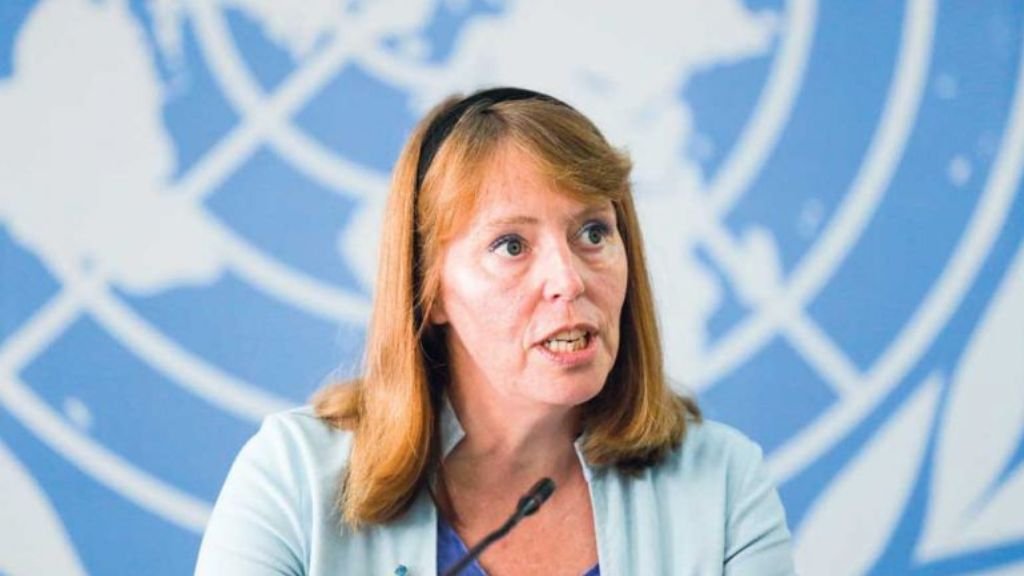
The UN Special Rapporteur for Human Rights in Cambodia, Rhona Smith, on Thursday called on the government to be fair and transparent when handling the issue of the evicted Vietnamese families in Kampong Chhnang province.
She made the statement during a press briefing at the Office of the High Commissioner for Human Rights (OHCHR) on the last day of her 11-day visit to the Kingdom, where she had met senior government officials, representatives of civil society, and members of the diplomatic community.
Her findings.
After travelling to the province to investigate the relocation plan, she concluded that there is "undoubtedly" a need to ensure the availability and sustainable management of water and sanitation for the victims — and to conserve the Tonle Sap lake and rivers resources.
"The [Kampong Chhnang] provincial authority also recognised the need to ensure that the relocation plan will not leave the people worse off — which would go against government's effort in poverty reduction," she said.
She added that some of the affected people are among the poorest in the region — and that the majority of them do not have identification documents granting them access to basic services and rights.
Smith also noted that the authority has been working with a private company to build infrastructure — such as roads, and supply utilities such as electricity and clean water — in one of the proposed relocation sites.
However, she found that other relocation sites are still lacking appropriate infrastructure.
Her call to action.
"I urge the government to improve the ways in which it addresses the complex issues of land rights — through more transparency, fairness, and by ensuring a holistic approach to settling land disputes when considering relocation. Only through this would no one be left behind." — Rhona Smith, UN Special Rapporteur
The government response.
During her meeting with Interior Minister Sar Kheng on Wednesday, Smith expressed concern about the relocation plan, saying it would contravene human rights.
But Sar Kheng argued that it is the responsibility of the authorities to improve sanitation and protect the environment.
He said the authorities paid much attention to the human rights aspects of whatever they did. No rights were violated nor properties confiscated as they abided by the law when maintaining order.
Kampong Chhnang provincial deputy governor, Sun Sovannarith, said the authority has clear plans in preparation for the relocation.
"There would be no problem for their children to access education because [school] is close to their houses — and there is no discrimination against the Vietnamese people," he said.
Why we're sharing this.
This article matters for one critical reason: it is the UN — not a private NGO — saying out loud that the people IHM serves are at risk of being "left behind."
Rhona Smith's words confirm what IHM has documented on the ground for years. The families in Kampong Chhnang are among the poorest in Southeast Asia. The majority lack identification documents. They face relocation plans where some sites have infrastructure and others do not — and Vietnamese families in particular have no right to own the land they are being moved to.
This international voice gives credibility to the urgency of IHM's work. Every child sponsored, every cause funded, is one more person who is no longer being left behind.